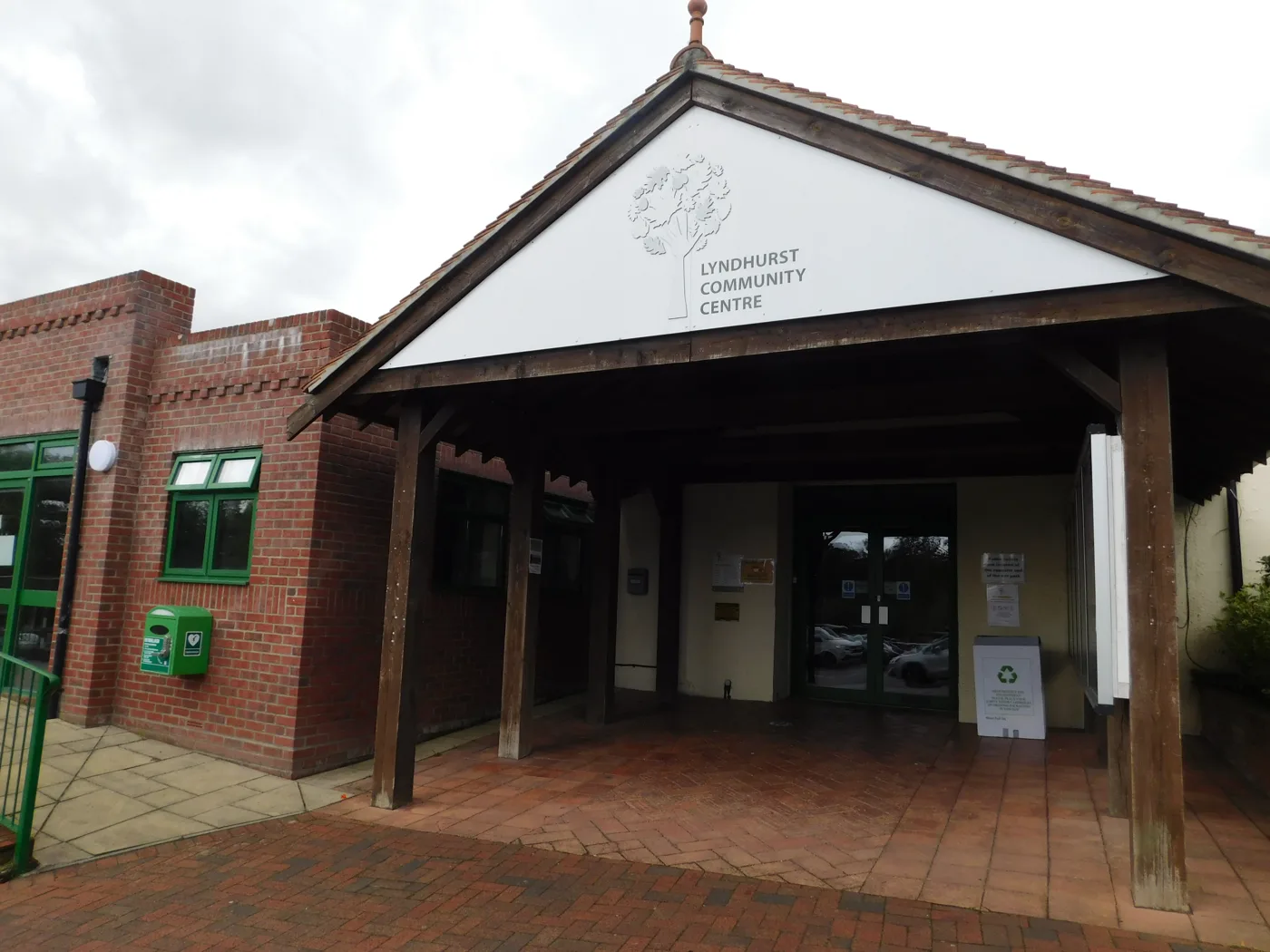

The district's £85,000 revenue grant scheme and its capital grants both close from April 2027. Each councillor's own grant rises to £2,500 instead.
New Forest District Council is closing the two grant schemes it uses to fund local charities and community groups, and handing the money to individual councillors to spend in their own wards instead. Six councillors have now called in the part of that plan dealing with the district’s community lottery, days before it was due to take effect.
Cabinet agreed the wider change in principle on 3 June. From 1 April 2027 the council will:
- end the annual Revenue Grant programme, worth £85,000 a year
- end the Capital Community Grant programme, worth £100,000 a year
- raise every councillor’s personal Community Engagement Grant from £1,000 to £2,500, which adds £72,000 a year
The net effect is a saving of £113,000 a year. The council’s own report says that money will be “earmarked as a contribution towards the Councils forecast budget deficit for 2027/28 of £1.499million”.
What the two schemes currently pay out
Both schemes are competitive and heavily oversubscribed. The report to Cabinet gives the 2026/27 figures:
- Revenue Grants: 42 applications, 23 successful, £85,500 awarded. The report notes that many were given “below the amount applied for to enable more organisations to be supported”.
- Capital Grants: 24 applications, 10 successful, £97,949 awarded.
That is 33 organisations funded between them this year, from 66 applications.
Two commitments are not affected. Five key partner organisations hold three-year rolling agreements worth £72,000 a year between them: Community First Wessex (£30,000), Youth and Families Matter (£12,000), and £10,000 each to New Forest Disability Information Service, The Crossings and The Handy Trust. Two community transport schemes, Call and Go (£29,998) and Group Hire (£14,361), are funded to 31 March 2028.
Why the council says it is doing this
The stated reasons are administration and money. Revenue grant applications currently go through a scoring matrix, a Task and Finish Group, interviews over three days, a scrutiny panel and then Cabinet. The report calls that “considerable Officer time”, and says ending it frees staff for work arising from local government reorganisation.
At Cabinet, the Portfolio Holder for Community, Safety and Wellbeing, Cllr Dan Poole, argued the new arrangement would put more money into wards. He gave a worked example: if Totton’s ward members pooled their grants there would be £17,500 available in Totton, rising to £22,500 if Marchwood and Eling joined in.
The Portfolio Holder for Finance and Corporate, Cllr Jeremy Heron, told the meeting the funding gap for 2027/28 was just under £1.5 million and that difficult decisions would have to be made.
Across the district the pot available through councillor grants rises from £48,000 to £120,000. So more money is distributed this way, but £185,000 of centrally awarded grants stops.
The objection, in the council’s own minutes
The minutes record several non-Cabinet members speaking against. One said the community grant process was “rigorous”, gave “a greater level of oversight than the members engagement grants”, and that there was “concern that there would be risk to those most vulnerable in the community without the broad oversight of the grant process”. Others said the voluntary and charitable sector was already finding funding harder to get.
The report’s own risk assessment concedes the point: “There is a risk that organisations who regularly receive a Revenue Community Grant will no longer receive this funding.”
The call-in: six councillors, one week
On 26 August, Cllr Poole made a portfolio holder decision delegating the community lottery central fund to an officer, the Service Manager for Revenues, Benefits and Customer Services, acting in consultation with him. That fund holds about £6,000, with annual income estimated at about £8,500 at current participation levels.
The decision was due to take effect on 4 September. It has been called in by Cllr Caroline Rackham (Liberal Democrat, Totton South), who wrote that “funds being distributed to community groups and charities should be considered by a wider group of councillors for complete fairness and pransparency” (the typing error is in the council’s published record). The call-in is supported by five other Liberal Democrat members: Cllr Philip Woods and Cllr David Millar (Fordingbridge, Godshill and Hyde), Cllr Malcolm Wade and Cllr Stephanie Osborne (Dibden and Dibden Purlieu) and Cllr Alex Wade (Hythe Central).
Under the council’s constitution an overview and scrutiny panel can call in an executive decision before it is implemented. The council has not yet published which panel will take it or when. The Housing and Communities Overview and Scrutiny Panel, which covers this portfolio area, next meets on Wednesday 16 September at 6pm, and no agenda has been published for it yet.
The lottery itself started in September 2025. Cllr Poole told Cabinet it was supporting more than 90 good causes in the district.
What it means for you
If you run a charity or community group here, assume the 2026/27 round is the last of its kind. Applications for revenue and capital grants will not open in September 2027 in the form you know. The report promises “fuller consultation and engagement” later this year alongside the budget, and says it will include organisations that received a grant in 2026/27. If you are one of them, that consultation is the moment to be heard, because the June decision was made in principle and final recommendations come back to Cabinet through the budget process.
If you need capital funding, the council’s answer is the Community Infrastructure Levy, which it says commits £1 million a year. Note the catch it flags itself: CIL money must show additionality, so it cannot be used for routine repairs or maintenance of a building you already have. That is exactly what a capital grant often paid for.
If you want to influence where the new money goes, the route is now your own ward councillor rather than an application form. All awards are published on the council’s website. You can find your councillors through the council’s democracy pages.
Where the money moves
Sources
- Community Grant Programme 2027/28, report to New Forest District Council Cabinet, 3 June 2026, for the recommendations, the 2026/27 application and award figures, the Band A and community transport grants, the £48,000 to £120,000 change, the £113,000 saving, the £1.499 million forecast deficit and the risk assessment.
- Cabinet minutes, 3 June 2026, for the resolution, the Totton worked example, the Finance Portfolio Holder’s comments, the objections from non-Cabinet members and the “over 90 good causes” figure.
- Portfolio holder decision, New Forest Community Lottery Central Fund, 26 August 2026, for the decision, the 4 September effective date, the call-in and the names of the six councillors.
- New Forest Community Lottery Central Fund report, 26 August 2026, for the approximately £6,000 currently available and the estimated £8,500 annual income.
- New Forest District Council councillor index for wards and party affiliations, and the Housing and Communities Overview and Scrutiny Panel meetings list for the 16 September date. All checked 31 August 2026.
Have your say